Sep 22, 2026•10 min read
The Non-Oil Engines: Culture, Tourism, Industry and Logistics
"A world-class museum and a working container terminal are both called diversification. Only one of them is earning its keep today. The other is a bet on the day after tomorrow."
By Shashi S. Piptan
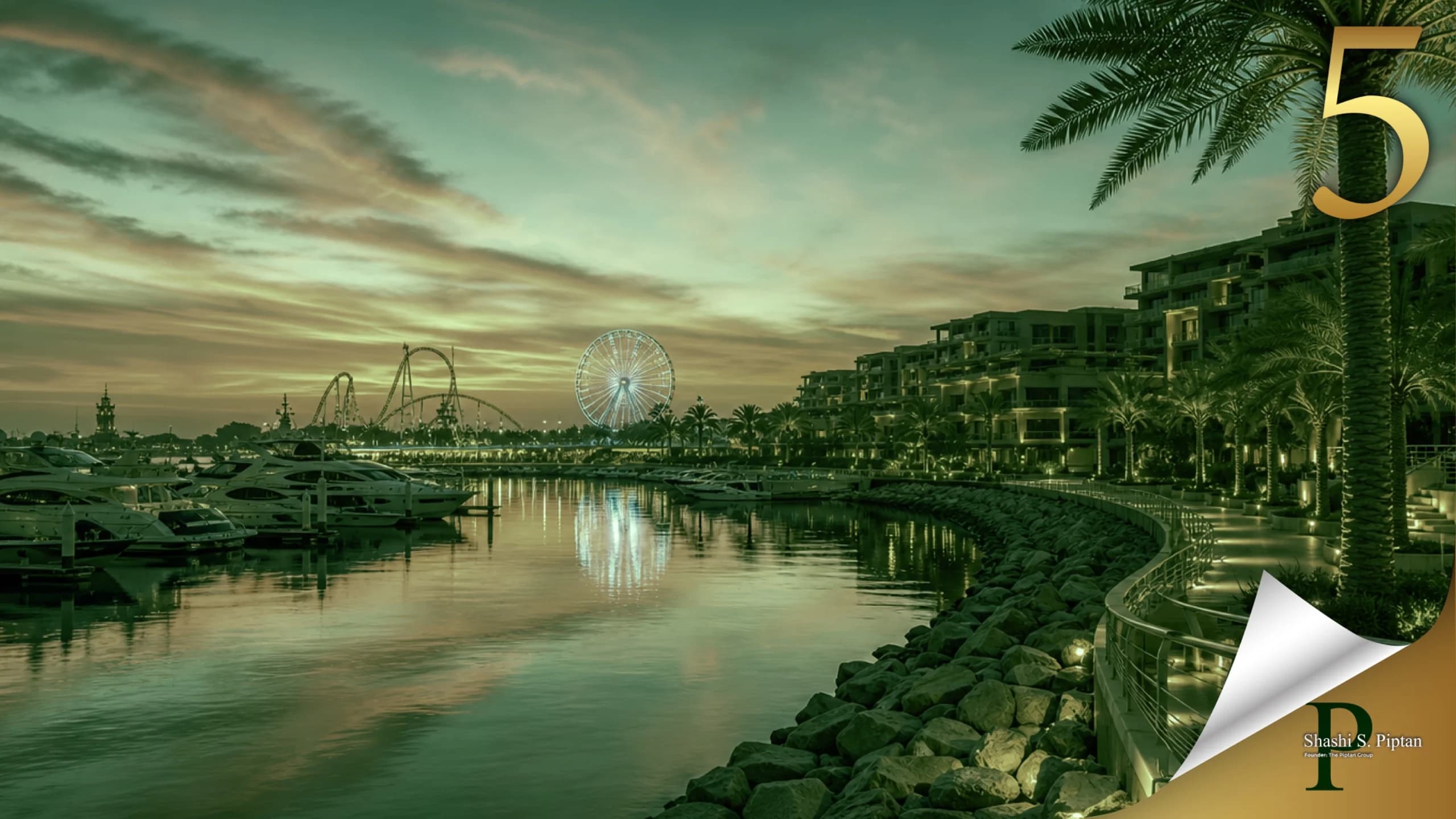
When Abu Dhabi’s diversification is presented to investors, it usually arrives as a list. The Saadiyat cultural district with its museums, Yas Island with its theme parks, the Khalifa Economic Zones with their factories, AD Ports with its terminals and trade corridors. The list is impressive, and it is meant to be. But a list is not an analysis, and treating these four as interchangeable success stories is exactly the kind of thinking a serious assessment should resist. My interest is not in inventorying what exists. It is in weighing which of these engines is genuinely pulling economic weight today, and which remain, honestly, subsidised bets on a future that has not fully arrived. The distinction matters, because the two kinds of asset carry completely different risk.
The engines that clearly pull weight: ports and industry
Begin with the parts of the picture where the case is strongest, because intellectual honesty means giving the successes their full due before scrutinising the rest. AD Ports Group reported record 2025 results, with revenue rising around 20 per cent year on year to roughly 20.8 billion dirhams, earnings before interest, tax, depreciation and amortisation of about 5.1 billion, and net profit above 2 billion. These are not soft numbers dressed up as diversification. They are the earnings of a business moving real cargo through real terminals along genuine international trade corridors, from the Gulf into Central Asia, Egypt, Pakistan, the Mediterranean and sub-Saharan Africa. When a port group earns profit from third-party trade flows, that is diversification in its hardest and most defensible form: external income that does not depend on the emirate’s own oil.
The industrial base beneath it is comparably real. The Khalifa Economic Zones, KEZAD, span a land bank in the order of 550 square kilometres, integrating manufacturing, logistics and trade in a way designed so that raw materials, production and export connect through the same system. In 2025 KEZAD was not only leasing land but beginning to sell it, including a transaction of several square kilometres to a private developer, signalling enough genuine demand to support a market in industrial land rather than merely subsidised occupancy. Manufacturing has been among the strongest contributors to the emirate’s non-oil GDP. This is an engine that produces output, employment and trade on competitive terms, and its weight in the economy is not in serious doubt.
The internationalisation of this engine distinguishes genuine competitiveness from captive domestic activity, and it is worth dwelling on. AD Ports has been acquiring and developing terminals and logistics operations well beyond the emirate’s borders, across Egypt, Pakistan, Jordan, Central Asia and the Mediterranean, and KEZAD has begun exporting its industrial-zone model abroad. A business that wins operations in competitive foreign markets is demonstrating something a purely domestic, state-supported enterprise cannot: that its capabilities have value others are willing to pay for. That is the clearest single signal I know that an economic engine is genuinely productive rather than merely sustained, and it is a large part of why I place trade and logistics at the solid end of the diversification spectrum with real confidence rather than polite hope.
If I were forced to identify where Abu Dhabi’s diversification is most solid, I would point here, to trade, ports, logistics and industry, rather than to the more photogenic assets. It is less glamorous than a Gehry-designed museum, and it is doing more of the actual economic work. That is worth stating plainly, because the coverage tends to invert the emphasis, leading with culture and treating the industrial spine as background.
The engines that are bets: culture and parts of tourism
Now the harder assessment, made in the same even-handed spirit. The Saadiyat Cultural District is a genuinely remarkable undertaking. It now brings together the Louvre Abu Dhabi, open since 2017, teamLab Phenomena, which opened in 2025, and the Zayed National Museum, which opened on the third of December 2025, with the Natural History Museum and the Frank Gehry-designed Guggenheim Abu Dhabi following. As a concentration of cultural institutions it has few equals anywhere. But I have to ask the audit question rather than the tourist’s question, and the audit question is whether these assets are, today, pulling economic weight in proportion to their cost, or whether they are long-horizon investments in soft power, national identity and future tourism whose economic return is largely still ahead of them.
The honest answer is the latter, and this is not a criticism so much as a correct classification. World-class museums are expensive to build and expensive to run, and their returns, to the extent they are economic at all, arrive slowly and indirectly, through tourism yield, international prestige, talent attraction and the gradual construction of a cultural economy. Abu Dhabi is quite open that tourism is meant to rise from around 5 per cent of GDP in 2023 toward 12 per cent by 2030, which is itself an admission that the cultural and tourism engine is a target being built toward rather than a weight already fully borne. Yas Island, with its cluster of theme parks and entertainment, sits in a similar category: real visitor infrastructure, real draw, but an asset whose contribution is still maturing and still, in part, a subsidised bet on becoming a leading global leisure destination.
It helps to attach some scale to the tourism ambition rather than leaving it abstract. Yas Island has assembled a cluster of major attractions, Ferrari World, Yas Waterworld, Warner Bros World and SeaWorld among them, and the emirate has invested heavily in aviation, hotels and events to convert its cultural and leisure assets into visitor numbers. The strategy is coherent and the visitor growth is genuine. But tourism’s current share of the economy, in the region of 5 per cent when the target of 12 per cent by 2030 was set, tells you that the sector is still being built toward its intended weight rather than already bearing it. The gap between the present share and the target is, quite literally, the size of the bet that remains to be won.
In fairness, I should not overstate the case that tourism is purely prospective. Hotel occupancy, aviation traffic through the emirate’s hubs, business and leisure events, and the spending they generate are real and growing income today, and part of the tourism engine is already turning under its own power. The honest formulation is that tourism sits partly in the earning column and partly in the betting column, with the cultural flagships weighted toward the latter and the established hospitality and leisure base weighted toward the former. It is a mixed engine, and the mix is shifting, gradually, toward self-sustaining income as the assets mature and the destination becomes better known.
A world-class museum and a working container terminal are both called diversification. Only one of them is earning its keep today. The other is a bet on the day after tomorrow.
I want to be careful and fair here, because it would be cheap to sneer at cultural investment on narrow financial grounds, and I am not doing that. There are entirely legitimate reasons for a state to build cultural institutions that have nothing to do with quarterly return: identity, education, the diversification of a nation’s image, the long project of becoming a place people choose rather than merely visit. Those are real and defensible goals. My point is strictly analytical. When these assets are placed on the same list as AD Ports and presented as equivalent proof of economic diversification, the list conflates two very different things: income the economy is earning now, and value the economy hopes to earn later. A serious investor has to hold them apart.
None of this is to say the cultural bet is unwise, and I want to be careful and fair here. Cultural institutions of this calibre do things that ports cannot: they change how a place is perceived, they draw talent that will not relocate to a purely commercial city, they anchor an identity that a young nation is still consciously constructing, and they build, slowly, the kind of destination that commands premium tourism over decades rather than seasons. If the bet succeeds, its returns will not appear as museum ticket revenue; they will appear diffused across the whole economy, in the calibre of people and capital the emirate can attract. That is a legitimate and sophisticated wager. It is simply a wager whose payoff lies years ahead, and it should be assessed as such rather than booked as present-day economic weight.
Why the distinction changes the risk
The reason this classification is not merely pedantic is that it determines how each asset should be judged and how it behaves under stress. A port group is judged on cash flows that exist today, and in a downturn it is defended by genuine demand for trade. A cultural district is judged on a thesis about the future, and in a downturn it is exposed as a cost that depends on continued state commitment. Both can be worthwhile. But an assessment that treats them identically will misprice the resilience of the whole diversification story, overstating how much of it is self-sustaining and understating how much still relies on the sovereign patience I described earlier in this series.
This connects directly to the audit in the previous article. Part of what is counted as Abu Dhabi’s non-oil economy is exactly this kind of state-funded, future-facing investment, activity that is genuinely occurring and genuinely non-oil in category, but that is sustained by sovereign capital rather than by independent market demand. The cultural and much of the entertainment build-out is diversification in the accounting sense while remaining, in the economic sense, a bet still being placed. Recognising that is not cynicism. It is the difference between reading the emirate’s balance sheet and reading its brochure.
A fair scorecard
So let me offer a scorecard rather than a celebration. In trade, ports and logistics, Abu Dhabi has built engines that genuinely pull economic weight, generate external income and would largely survive a period of lower oil revenue. That is real, hard diversification, and it is the strongest part of the story. In industry and manufacturing, the case is similarly solid, with competitive demand and rising output. These are the parts of the non-oil economy an investor can lean on today.
In culture and significant parts of tourism and entertainment, Abu Dhabi has built extraordinary assets whose economic weight is still largely ahead of them, sustained for now by state commitment and justified by a mix of soft-power, identity and long-horizon tourism goals that are legitimate but not yet economically self-sustaining. These are bets, sensibly placed and impressively executed, but bets nonetheless. The mistake to avoid is neither dismissing them nor overcrediting them, but seeing them clearly for what they are. Abu Dhabi’s non-oil economy is not one engine but several, running at very different speeds, and the honest observer keeps a separate gauge on each. In the next article I turn to one more engine that sits, interestingly, between these two categories: the financial centre, which is generating real activity today while still competing for a position it has not yet secured.